
Walk into a strength session at Momentum Athletic Performance and you will notice something you will not see in most weight rooms: sensors tracking the bar while athletes lift, and coaches talking about speed, even during strength work. That is velocity-based training, or VBT, and it is one of the most parent-reassuring tools in modern athletic development. Here is what it is, in plain language, and why we use it with teen athletes.
The old way: guessing with percentages
Traditional strength programs prescribe weight as a percentage of an athlete's one-rep max, the heaviest lift they can manage once. That approach has two problems for teenagers. First, testing a true max on a growing athlete is not something we are interested in doing. Second, a teen's strength genuinely changes week to week with growth spurts, school stress, or a hard practice the night before, so a percentage calculated last month may be wrong today.
When the number on the program does not match the athlete in front of you, one of two things happens: the load is too heavy and form breaks down, or it is too light and the session accomplishes little. Neither is acceptable.
The VBT way: measure the bar, not the ego
Velocity-based training flips the equation. Instead of asking "how heavy is it?", it asks "how fast did it move?" A small sensor measures the speed of every rep in meters per second. Bar speed is an honest signal of how the athlete is performing right now: if the bar is moving fast and crisp, they can handle more; if it slows below the target range, the load comes down immediately, that session.
Coaches call this auto-regulation, and it is why VBT suits teenagers so well:
- It removes ego lifting: the sensor does not care what a teammate is lifting, only how the bar moved
- It adjusts to growth spurts and fatigue automatically, week to week and day to day
- It keeps technique the priority: sloppy reps show up instantly as slow, inconsistent bar speeds
- It gives athletes objective progress data, which builds motivation better than any pep talk
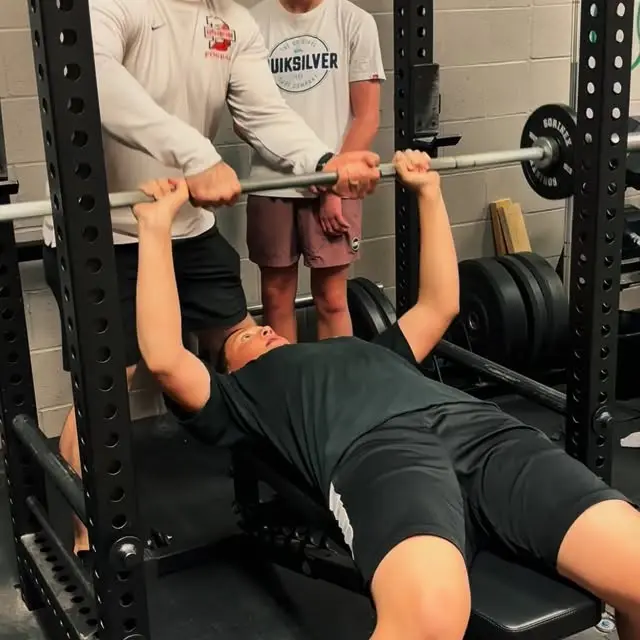
Coach's Tip
Ask your teen after their next strength session: "What was your bar speed today?" Athletes who train with VBT can usually tell you, and that awareness is the point. An athlete who understands why the load went up or down is learning to train intelligently for life, not just follow orders.
How we use VBT at Momentum
VBT anchors the strength side of our Elite Sports Performance group for high school athletes, where programming gets individualized and intensity climbs. It fits into a bigger measurement culture here in Canal Winchester: sprints are timed on DASHR electronic gates, reaction work runs on Blazepods, and lifts are tracked by velocity. Nothing is guesswork.
Because our groups stay small, the data never replaces the coach. It informs the coach. A CSCS or Parisi-certified coach is watching every set, reading the numbers alongside the movement, and making the call on what happens next.
Is my teen ready for velocity-based training?
Readiness has nothing to do with how strong an athlete already is. It is about movement quality. Every athlete at Momentum earns load the same way: demonstrate the technique first, then progress. Younger athletes in our middle school group build those lifting patterns with strict standards, so by the time they reach the high school group, VBT is a natural next step rather than a leap.
If you are wondering where your athlete fits, our FAQ page answers the common questions about ages and experience levels, or skip straight to trying it. The first class is free, and the coach will place your athlete in the right group after watching them move.