
You have seen the videos: an athlete rattling through an agility ladder at blinding speed, feet a blur, crowd of teammates cheering. It looks impressive. Here is the uncomfortable question every parent should ask: did that athlete just get faster for their sport, or just better at the ladder?
Busy feet are not the same thing as a fast athlete. At Momentum Athletic Performance, we build speed and agility training around one standard: it has to show up on game day. That standard is called transfer, and it changes everything about how training should look.
What "transfer" actually means
Training transfers when the quality you build in the gym appears in competition. Think of the outfielder who closes on a fly ball two steps sooner, the point guard who beats the defender off the dribble, the midfielder who wins every 50/50 ball because she arrives first. If a drill does not eventually make one of those moments better, it is exercise, not athletic development.
The three ingredients of game speed
Watch any field or court sport closely and game speed breaks down into three trainable qualities:
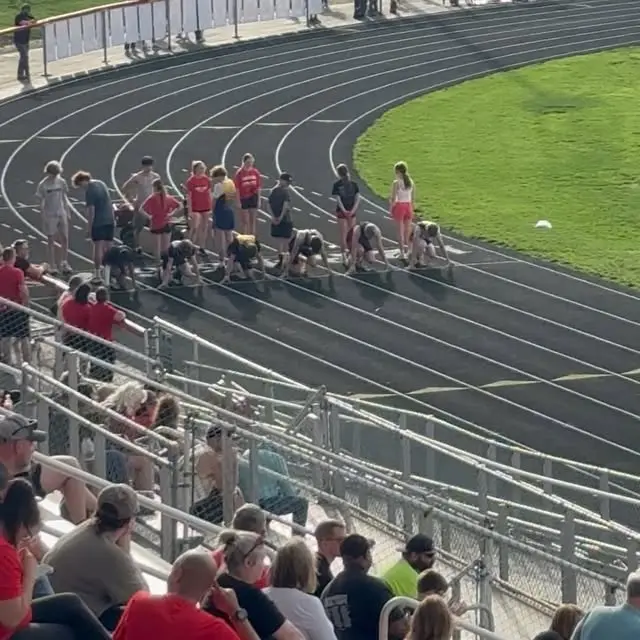
- Acceleration. Most game sprints are 10 yards or less. The athlete who wins the first three steps wins the play, which is why acceleration mechanics get more of our training time than anything else.
- Change of direction. Cutting is really two skills: slamming the brakes (deceleration) and redirecting force at the right angle. Athletes must be taught both, and most have never been coached to stop.
- Reaction. Games are unpredictable. Reacting to a ball, an opponent or a whistle is different from executing a rehearsed pattern, so training has to include unplanned, reactive movement.
From drills to skills: how we progress it
Drills are not the enemy. Unstructured drills are. Every session in our training groups follows a progression: learn the movement pattern in a controlled setting, load it with speed and intensity, then make it reactive. That last step is where Blazepods come in: light-based reaction pods that force athletes to read and respond instead of memorizing a sequence. When a 13-year-old is sprinting, cutting and re-accelerating in response to a random light, the training finally looks like the sport.
Because our groups stay small, a CSCS or Parisi-certified coach is correcting mechanics on every rep. Ten perfect accelerations beat forty sloppy ones, because the nervous system remembers whatever you rehearse, good or bad.
Coach's Tip
Next time you watch your athlete's game, count the sprints longer than 20 yards. There usually are not many. Then count the short bursts, stops and cuts. There will be dozens. That ratio should tell you exactly what their speed training ought to emphasize.
Measurement keeps everyone honest
The fastest way to know whether training transfers is to measure it. Every athlete at Momentum sprints through DASHR electronic timing gates, so we track 10-yard and flying splits to the hundredth of a second. Parents see objective numbers instead of promises, athletes chase personal records instead of vague encouragement, and coaches adjust programming based on data. If the training works, the clock says so.
What to look for in a speed program
- Acceleration and deceleration coached as skills, not just conditioning
- Reactive, unpredictable elements, not only pre-planned patterns
- Small groups where technique is corrected every rep
- Objective timing so progress is proven, not assumed
That is the checklist we built our program around. See when sessions run on our weekly schedule, and if you want to watch it before you commit, good. Your athlete's first class is free.